Applied I Ching
When a problem is internal, functional or emotional, Applied I Ching offers a different way of working. It uses channel conversion therapy, built on the logic of the I Ching, to move yin and yang through the whole body. You learn twelve patterns, each a complete treatment. No knowledge of the I Ching is needed.
Three elements of every treatment
Dance of the Channels treats a problem where it shows itself. This course works differently: channel conversion therapy builds each treatment from three layers. Together they make one of the twelve patterns.
Dynamic interactions
Alternating between yin and yang on the limbs creates a movement of yin and yang through the whole body.
Static interactions
The channels are chosen to form a stable structure, drawn from the channel interactions of Unified Acupuncture Theory.
The channel code
Each channel is given a gua from the Early Heaven Ba Gua, and the code guides the choice of points along the channel.
What you will learn
Yin and yang in the I Ching
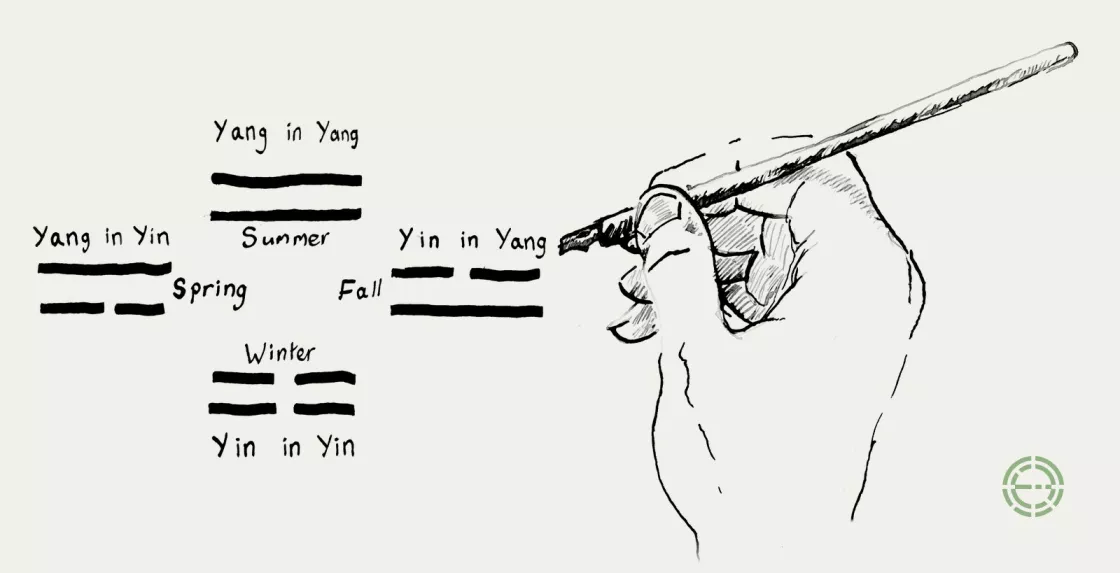
How yin and yang divide and combine, through the seasons and into the five elements, and from five elements to six, with Heaven.
Dynamic and static interactions
How to move yin and yang through the body, and how to hold that movement in a stable structure of channels.
The channel code
The Early Heaven Ba Gua, and how it guides the choice of points on each channel.
The twelve patterns
Six based on the levels of the channels, three on the horizontal levels of the UAT model, and three on the vertical positions of the channels.
Patterns for the clinic
Which pattern to use for symptoms along vertical areas of the body, for mental health and insomnia, and for external pathogenic factors.
A vessel for your patient
An excellent course for learning to build a vessel: a structure that holds your patients while they move through what they are going through.
Why this course
The I Ching is vast and dense, and it can seem far from the treatment room. In this course I break down its basic use in acupuncture and make it practical: you leave on the last day with twelve patterns you can use with your next patient. Where Applied Nanjing works with the transformation itself, these patterns build the vessel: a structure that holds the patient while they move through what they are going through. Used together with the other courses, they give you a way of working with a wide range of what you meet in the clinic.
Day by day
About 7 hours of teaching each day, with a morning break, lunch and an afternoon break.
Movement, structure and code
General introduction, and the Unified Acupuncture Theory model. Dynamic interactions. Static interactions. The channel code. Introduction to the twelve patterns: the six levels of the channels.
The patterns in practice
Patterns from the three levels of the UAT model. Patterns from the vertical positions of the channels. Patterns for symptoms along the body, for mental health and insomnia, and for external pathogenic factors. Summary, demonstrations and practice.
What past participants say
It’s a wonderful course, attended it for the second time.
Wonderful course, great material, very well presented with a logical explanation of the whys, hows and when to utilise one system or another. Very generous with information.
The Unified Acupuncture Theory path
The three Level 1 courses can be taken in any order. After Applied I Ching you can go on to Advanced Applied I Ching.
Dance of the Channels · Level 1
Channel interactions and holography, 13–14 March 2027. Recommended first. See the course
Applied I Ching · Level 1
Twelve patterns for working with the whole body. This course.
Advanced Applied I Ching · Level 2
The 64 hexagrams, for seasonal and five-element treatments, 4–5 December 2027. Requires Applied I Ching. See the course
Every course gives Jonathan’s attendance certificate for CPD (14 hours). After the three Level 1 courses (Dance of the Channels, Applied Nanjing and Applied I Ching) you can apply for the UAT Practitioner certificate. Details: uat.training/certification.
Jonathan Shubs
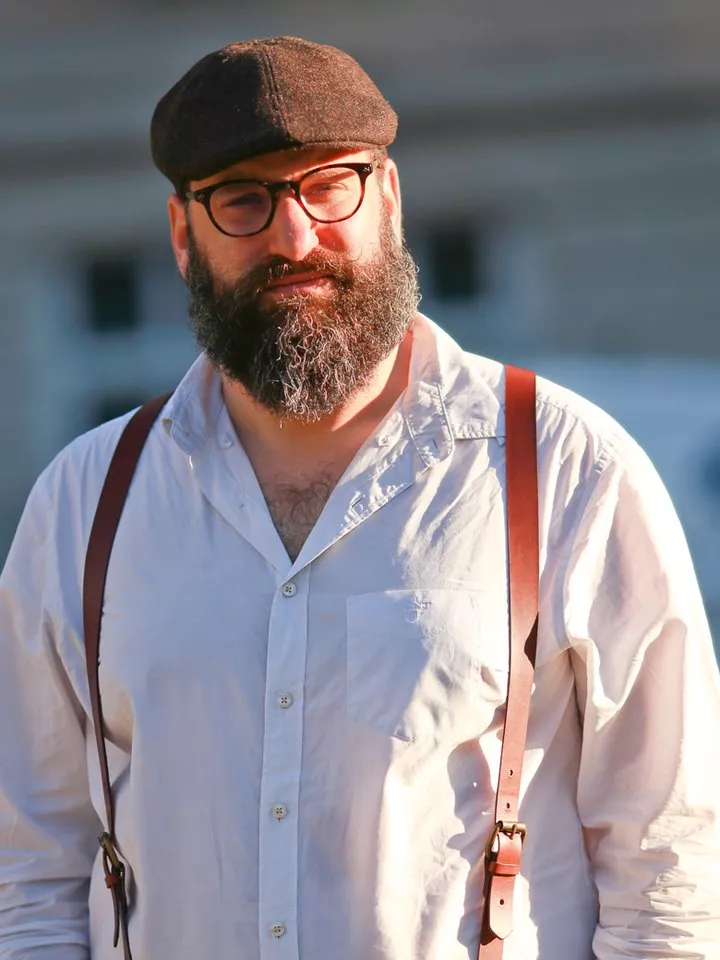
Jonathan Shubs has practised acupuncture in Lausanne, Switzerland, since 2006, and developed Unified Acupuncture Theory. A graduate of the Shao Yang Institute, he holds the Swiss federal diploma in naturopathy in Traditional Chinese Medicine (Professional Master). He studied for many years with Daniel Deriaz and with Dr Richard Tan, and received Balance Method Gold level practitioner status in 2014.
Unified Acupuncture Theory grew out of a simple question: why does a treatment work? It brings channel interactions, holography, the logic of the I Ching and the five elements into one coherent map. When you understand that, you can choose what to do, rather than follow a recipe.
His article “The Foundations of Channel Theory” (Journal of Chinese Medicine, 2012) laid the foundation of Unified Acupuncture Theory. He is the author of Sun's Season of Channels (2021) and Sun's Dance of the Channels (2022), both published by Singing Dragon, and has been a certified Compassionate Inquiry® practitioner since 2023. He has taught in Poland, Ireland, the Netherlands, Belgium, England, Switzerland and Australia, and has been an honorary member of the Polish Association of Professional Acupuncturists (PSAZ) since 2020.
Students often say that things they had learned for years suddenly fall into place.
Questions
Do I need to know the I Ching?
No. You need a basic knowledge of the channels and where they run. The I Ching, the Ba Gua and the channel code are taught from the beginning.
Who is this course for?
Acupuncturists and advanced students of acupuncture. Also shiatsu practitioners and kinesiologists with a basic knowledge of the channels and where they run.
Do I have to take the courses in a set order?
No. The three Level 1 courses can be taken in any order. Dance of the Channels is recommended first, because the static interactions in this course use its channel interaction systems. If you start here, the interactions you need are taught within the course.
How is it different from Applied Nanjing?
Both are used for internal disorders. Applied I Ching builds the vessel: the structure in which change can happen. Applied Nanjing works with the transformation itself. Many people take both.
Is there a next step?
Yes. Advanced Applied I Ching goes deeper into the theory and into complex cases. In 2027 it takes place on 4–5 December.
How much does it cost?
Current prices are shown in the registration form: a lower price when you register with a seat guarantee, a higher one with deferred payment. Prices exclude VAT.
Will I get the course materials?
Yes. After the course we pass the e-mail address you registered with to Jonathan, and he gives you access to his training portal, with the course materials and additional resources.
Will I get a certificate?
Yes, Jonathan’s attendance certificate for your CPD, for 2 days (14 hours) of teaching. The course also counts towards the UAT Practitioner certificate.
Is the course recorded?
No. The course is taught in person only, and is not recorded or streamed.
What if I cannot attend?
Cancellations and refunds are covered in our terms. For questions, write to kursy@akupunktura.edu.pl.