Applied Nanjing
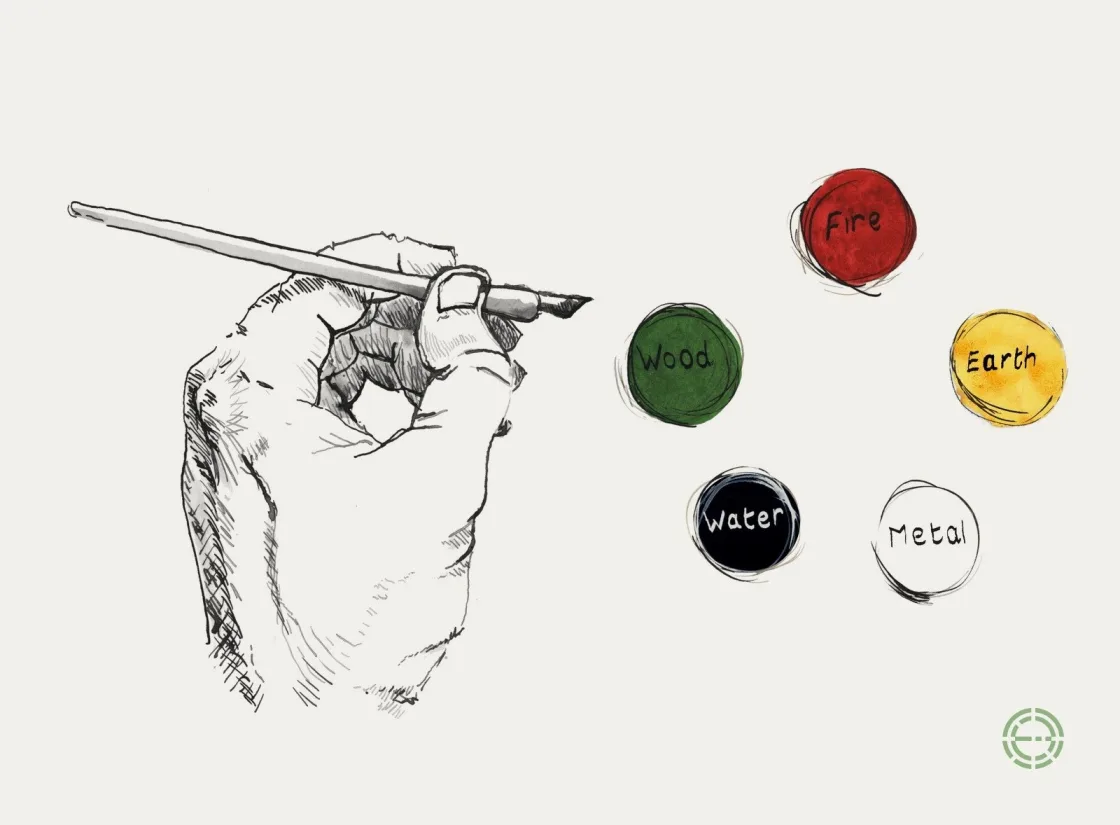
The Nanjing, the Classic of Difficulties, holds one of the most elegant ideas in acupuncture: every channel carries all five elements, and four well-chosen points can strengthen or calm an element. Jonathan Shubs brings the Sa'am four-needle approach together with abdominal palpation and the channel interactions of Unified Acupuncture Theory. Especially useful for Zang-Fu patterns and for emotional wellbeing.
Three steps to every treatment
The abdomen tells you where to start. The elements tell you what to do. Four needles do the rest.
1. Palpate the abdomen
Each organ has its reaction zone on the abdomen. What you feel there shows which element is out of balance.
2. Tonify or disperse
Decide whether the element needs strengthening or calming, and whether to work on its yin or its yang channel.
3. Place four needles
The Sa’am four-needle combination, chosen for the pattern you found on the abdomen.
What makes this course different
Many courses teach the Sa'am four-needle approach. What is particular here is that it is taught through the channel interaction systems of Unified Acupuncture Theory.
The classics stay the foundation
The classic four-needle combinations stay the foundation of the treatment.
One channel instead of several
With complex abdominal patterns, when more than one channel is affected, you look for a single channel that interacts with all of them, and treat that one, with the fewest needles possible.
You do not need to have taken Dance of the Channels first: the channel interactions this course uses are taught within it.
What you will learn
Yin, yang and the five elements
Yin and yang as the I Ching describes them, through the seasons and into the elements, with Heaven as the sixth distinction.
The two cycles
How the elements nourish and control one another.
The five-element points
The five-element points on every channel, and how they are used.
Tonification and dispersion
How to needle to strengthen, and how to needle to calm.
Abdominal palpation
How the abdomen shows which element needs attention.
The emotions of the elements
How the five and a half emotions show where an element is struggling, and how the patterns support emotional wellbeing. Plus patterns to tonify and to disperse, for the yin and the yang elements.
Why this course
The Nanjing gives acupuncture a complete way of working with internal problems, using very few needles. With the right acupuncture approach, internal problems can be treated without herbs. What I value most in bringing the four needles together with abdominal palpation is that the abdomen gives you a clear diagnosis, and a way to check the effect of your treatment straight away, with the patient. And because I teach it through the channel interactions of Unified Acupuncture Theory, you also learn to find the one channel that can treat several at once.
Day by day
About 7 hours of teaching each day, with a morning break, lunch and an afternoon break.
The elements and the yin channels
Introduction to the five elements, with classical references. The dynamic use of the five elements. Tonification and dispersion in needle technique. Working with the six yin channels. Abdominal palpation, with demonstration.
The yang channels and the clinic
Working with the six yang channels. Abdominal palpation, with demonstration. Dispersing the yin and the yang channels. The four needles in the clinic: examples and case studies. Hands-on practice.
What past participants say
I love every moment! Each time I am attending I get surprised by the high level of teaching, the practical application of it in the clinic.
Very useful that practice was combined with theory for better integration. Perfect and incredibly inspiring.
Very good and structured explanation to the core of the subject.
Excellent course, useful information. Very well-informed teacher.
Practitioners on this course
The Unified Acupuncture Theory path
The three Level 1 courses can be taken in any order. After Applied Nanjing you can go on to Advanced Applied Nanjing.
Dance of the Channels · Level 1
Channel interactions and holography. Recommended first. See the course
Applied Nanjing · Level 1
The four-needle approach, guided by the abdomen. This course.
Advanced Applied Nanjing · Level 2
Dynamic five-element transformation for internal disorders. See the course
Every course gives Jonathan’s attendance certificate for CPD (14 hours). After the three Level 1 courses (Dance of the Channels, Applied Nanjing and Applied I Ching) you can apply for the UAT Practitioner certificate. Details: uat.training/certification.
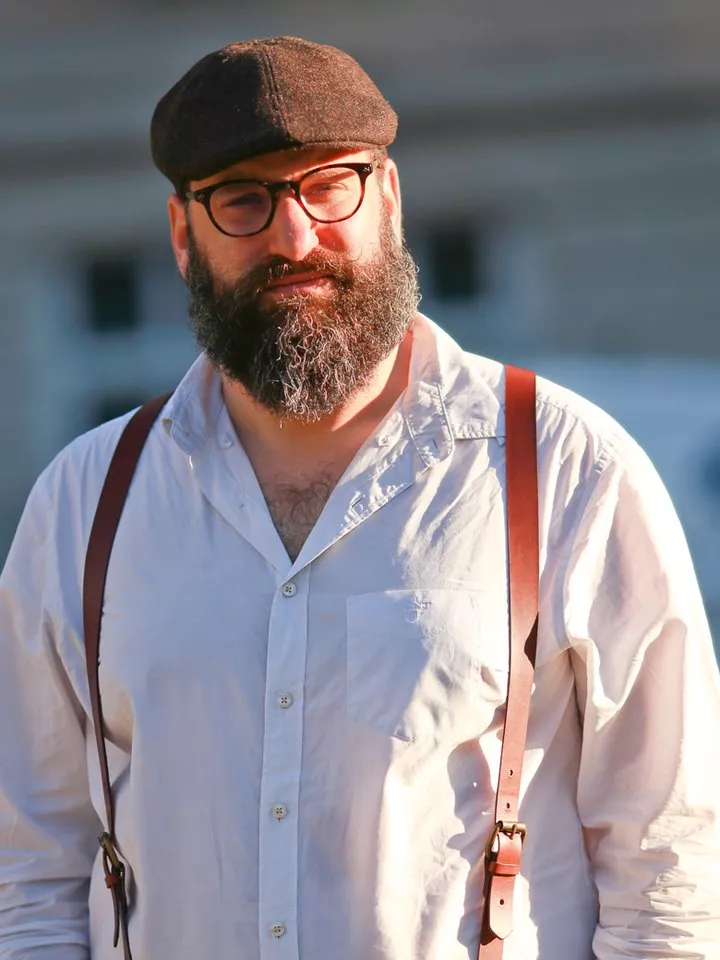
Jonathan Shubs
Jonathan Shubs has practised acupuncture in Lausanne, Switzerland, since 2006, and developed Unified Acupuncture Theory. A graduate of the Shao Yang Institute, he holds the Swiss federal diploma in naturopathy in Traditional Chinese Medicine (Professional Master). He studied for many years with Daniel Deriaz and with Dr Richard Tan, and received Balance Method Gold level practitioner status in 2014.
Unified Acupuncture Theory grew out of a simple question: why does a treatment work? It brings channel interactions, holography, the logic of the I Ching and the five elements into one coherent map. When you understand that, you can choose what to do, rather than follow a recipe.
His article “The Foundations of Channel Theory” (Journal of Chinese Medicine, 2012) laid the foundation of Unified Acupuncture Theory. He is the author of Sun's Season of Channels (2021) and Sun's Dance of the Channels (2022), both published by Singing Dragon, and has been a certified Compassionate Inquiry® practitioner since 2023. He has taught in Poland, Ireland, the Netherlands, Belgium, England, Switzerland and Australia, and has been an honorary member of the Polish Association of Professional Acupuncturists (PSAZ) since 2020.
Students often say that things they had learned for years suddenly fall into place.
Questions
Do I need to know the five elements already?
A basic knowledge of the channels and where they run is enough. Yin and yang, the seasons and the five elements are taught from the beginning.
Who is this course for?
Acupuncturists and advanced students of acupuncture. Also shiatsu practitioners and kinesiologists with a basic knowledge of the channels and where they run.
Do I have to take the courses in a set order?
No. The three Level 1 courses can be taken in any order. Dance of the Channels is recommended first, because this course uses the same channel interactions in a new way. If you start here, the interactions you need are taught within the course.
How is it different from Applied I Ching?
Both are used for internal disorders. Applied I Ching builds the vessel: the structure in which change can happen. Applied Nanjing works with the transformation itself: the four needles work directly with what is weak or too strong. Many people take both.
Will I get the course materials?
Yes. After the course we pass the e-mail address you registered with to Jonathan, and he gives you access to his training portal, with the course materials and additional resources.
Will I get a certificate?
Yes, Jonathan’s attendance certificate for your CPD, for 2 days (14 hours) of teaching. The course also counts towards the UAT Practitioner certificate.
Is there a next step?
Yes. Advanced Applied Nanjing goes deeper into the theory and into complex cases.
Is the course recorded?
No. The course is taught in person only, and is not recorded or streamed.
When is the next date?
We will announce the next date in Poland on this page. For questions, write to kursy@akupunktura.edu.pl.
Reserve your spot
Registration form
Registration for this date is closed. Leave your e-mail — we will let you know about the next edition.