Dance of the Channels
Why does a point far from the problem help? This course answers that question with one clear map: which channels speak to each other, and where on the body to find the place that answers. It is the foundation of Unified Acupuncture Theory, and it works from the first day back in your clinic, especially for pain and musculoskeletal problems.
Three steps to every treatment
Everything in the course serves one simple sequence, which you can use with the next patient who walks in.
1. Find the affected channel
Follow the main pathways to see which channel, or channels, pass through the place where the problem is.
2. Choose a channel that answers it
Use the six systems of channel interaction, grounded in space, time and sunlight, to choose the channel that can balance it.
3. Place the needles by image and mirror
Holography shows you where on that channel to needle, choosing a similar structure: bone treats bone, tendon treats tendon.
What you will learn
Holography: imaging and mirroring
How the body repeats itself at every scale, and how to read the arm as an image of the leg, the hand as an image of the head.
Yin and yang for acupuncture
Yin and yang as the I Ching describes them, linked to the seasons and the five elements, and what this means for choosing points.
The Unified Acupuncture Theory model
One map that brings the Balance Method of Dr Richard Tan, Master Tong’s acupuncture and Japanese meridian theory into a single way of thinking.
The six systems of channel interaction
Interior and exterior, full channels, closed circuits, biorhythm neighbours, midday and midnight, and same name by exposure to the sun.
Every channel, one by one
Each of the twelve channels and the channels it interacts with, with shortcuts to remember them.
Real cases, worked through together
More than twenty clinical cases, from wrist and Achilles pain to headaches, followed from diagnosis to needle placement, with live demonstrations and practice in pairs.
Why this course
Many approaches teach the same basic idea: needle away from the pain to treat it. The Balance Method of Dr Tan, distal needling and Master Tong’s acupuncture all give results when they are applied exactly as taught. What I wanted was a system I could understand. In this course I take these approaches apart into their simplest building blocks, and put them back together as one map. You leave knowing what to do and why it works, so you can adapt it, bring in what you already know, and keep developing your own style.
Day by day
About 7 hours of teaching each day, with a morning break, lunch and an afternoon break.
The map
Why channels interact. Yin and yang in the I Ching and the Ling Shu. Holography: the basic image and mirror of the body, and the reversed image and mirror. The six systems of channel interaction, presented on the 24-hour clock. The Unified Acupuncture Theory model: how it is built, step by step, and how it is used.
Into the clinic
Every channel, one by one, and the channels it interacts with. Clinical cases, from diagnosis to needle placement. Live demonstrations and practice in pairs.
The companion book
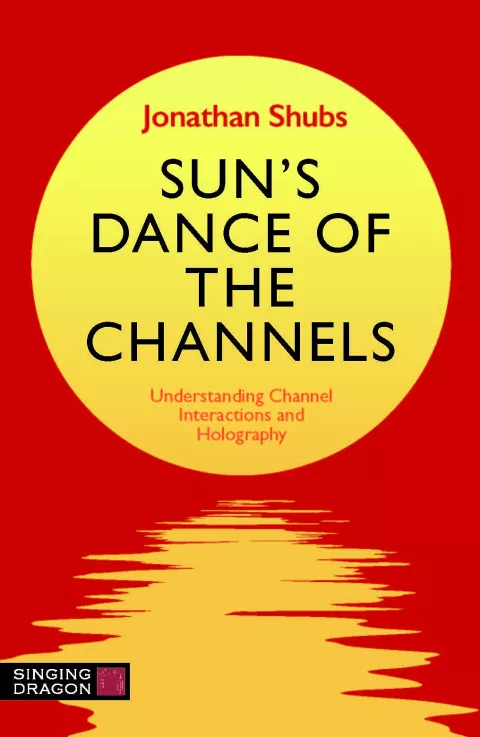
Sun's Dance of the Channels tells the ideas of this course as a story. Many practitioners read it before the course, or after it to let the course settle. It is not required.
What past participants say
Even though I knew Dr Tan’s system well, I really appreciated the teaching approach and the unifying, elegant view of the different balance systems. It sheds light on a lot of things. And I finally understood Tung acupuncture. Now I allow myself to use it, because I didn’t like applying something I don’t understand.
I am a new acupuncturist and this training exceeds my expectations. Jonathan teaches a solid foundation course that allows us to quickly understand and apply the theory in the clinic.
Wonderful course, great material, very well presented with a logical explanation of the whys, hows and when to utilise one system or another. Very generous with information.
Fantastic content, clear and concise. Jonathan is an amazing teacher and clears up confusion regarding Chinese medicine theory. Highly recommended.
Theories were explained and justified in a way that was easy to follow; expertise, clarity and structure of the teaching.
Practitioners on this course
The Unified Acupuncture Theory path
The three Level 1 courses can be taken in any order. Dance of the Channels is recommended first, because the other two build on the same channel interactions.
Dance of the Channels · Level 1
Channel interactions and holography, with a strong focus on pain and musculoskeletal problems. This course.
Applied Nanjing · Level 1
The four-needle approach, guided by the abdomen: Zang-Fu patterns and emotional wellbeing. See the course
Applied I Ching · Level 1
Twelve patterns for working with the whole body, 9–10 October 2027. See the course
Every course gives Jonathan’s attendance certificate for CPD (14 hours). After the three Level 1 courses you can apply for the UAT Practitioner certificate, and after the two Level 2 courses for the UAT Advanced Practitioner certificate. Details: uat.training/certification.
Jonathan Shubs
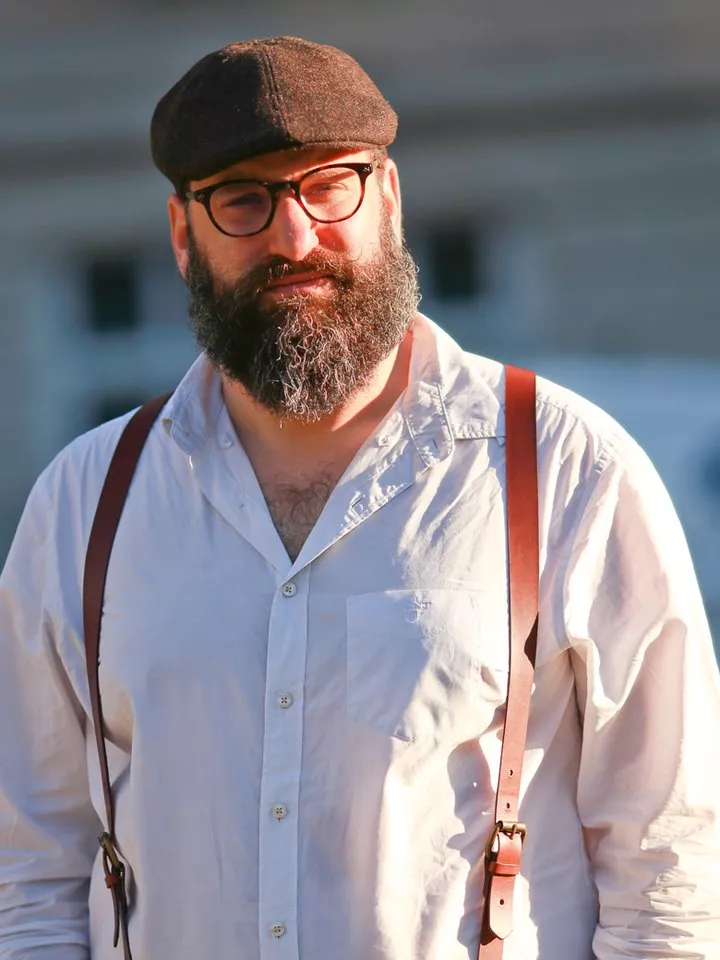
Jonathan Shubs has practised acupuncture in Lausanne, Switzerland, since 2006, and developed Unified Acupuncture Theory. A graduate of the Shao Yang Institute, he holds the Swiss federal diploma in naturopathy in Traditional Chinese Medicine (Professional Master). He studied for many years with Daniel Deriaz and with Dr Richard Tan, and received Balance Method Gold level practitioner status in 2014.
Unified Acupuncture Theory grew out of a simple question: why does a treatment work? It brings channel interactions, holography, the logic of the I Ching and the five elements into one coherent map. When you understand that, you can choose what to do, rather than follow a recipe.
His article “The Foundations of Channel Theory” (Journal of Chinese Medicine, 2012) laid the foundation of Unified Acupuncture Theory. He is the author of Sun's Season of Channels (2021) and Sun's Dance of the Channels (2022), both published by Singing Dragon, and has been a certified Compassionate Inquiry® practitioner since 2023. He has taught in Poland, Ireland, the Netherlands, Belgium, England, Switzerland and Australia, and has been an honorary member of the Polish Association of Professional Acupuncturists (PSAZ) since 2020.
Students often say that things they had learned for years suddenly fall into place.
Questions
Who is this course for?
Acupuncturists and advanced students of acupuncture. Also shiatsu practitioners and kinesiologists with a basic knowledge of the channels and where they run.
Do I need to know any other system first?
No. You need a basic knowledge of the channels and where they run. Everything else is taught from the beginning.
Do I have to take the courses in a set order?
No. The three Level 1 courses can be taken in any order. Dance of the Channels is recommended first, because Applied Nanjing and Applied I Ching build on the same channel interactions.
Should I read the book first?
Sun’s Dance of the Channels tells the same ideas as a story. It is a good companion before or after the course, but not required.
How much does it cost?
Current prices are shown in the registration form: a lower price when you register with a seat guarantee, a higher one with deferred payment. Prices exclude VAT.
Will I get the course materials?
Yes. After the course we pass the e-mail address you registered with to Jonathan, and he gives you access to his training portal, with the course materials and additional resources.
Will I get a certificate?
Yes, Jonathan’s attendance certificate for your CPD, for 2 days (14 hours) of teaching. The course also counts towards the UAT Practitioner certificate.
What language is the course taught in?
Jonathan teaches in English, with Polish interpretation throughout.
Is the course recorded?
No. The course is taught in person only, and is not recorded or streamed.
What if I cannot attend?
Cancellations and refunds are covered in our terms. For questions, write to kursy@akupunktura.edu.pl.